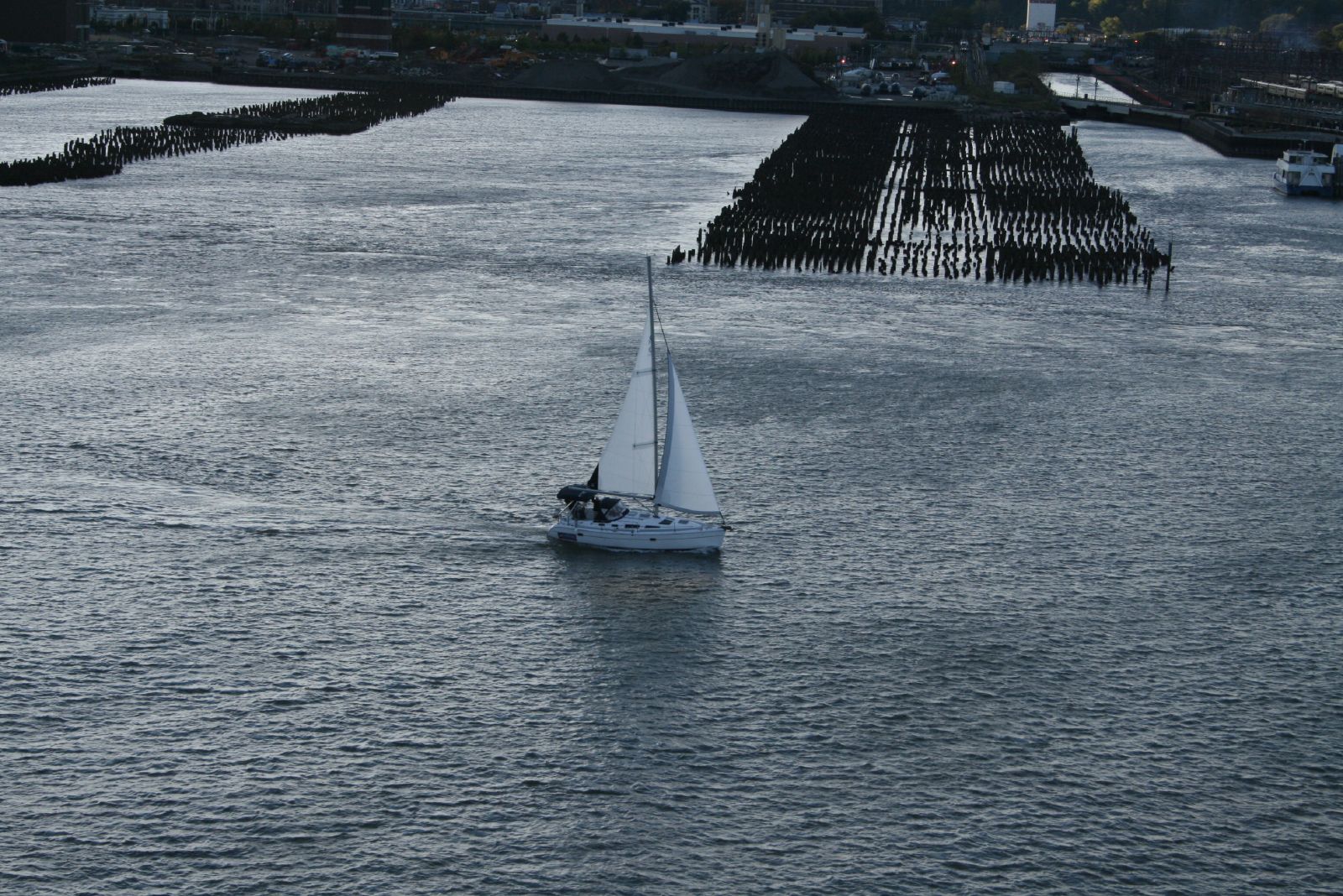
Source-listed creator: Chris Breeze from May's Lick, KY, USA / Image source: File:Out for a Sail (1876264661).jpg — CC BY 2.0. Changes: resized for display without semantic edits.

The main difference between a sloop and a ketch is the mast arrangement. A sloop generally has one mast carrying a mainsail and a headsail. A ketch generally has two masts: a mainmast and a smaller mizzen mast positioned behind it. The mizzen does not extend past the rudder post.
That structural difference affects how sail area is distributed and can influence handling, windward performance, steering balance, and racing speed. However, the rig label alone does not determine how a boat will perform or whether it is appropriate for offshore cruising.
Sloop vs. ketch at a glance
| Feature | Sloop | Ketch |
|---|---|---|
| Mast arrangement | Generally one mast | Generally two masts, including an aft mizzen |
| Sail arrangement | Mainsail and headsail | Mainsail, mizzen, and headsail or headsails |
| General strengths described in the source | Simple control, maneuverability, versatility, and windward performance | Divided sail area, potentially improved controllability in rough conditions, and possible steering-balance benefits |
| Racing tendency described in the source | Commonly used for racing | Described as likely slower than a sloop or cutter in racing contexts |
| Typical use context listed in the source | General-purpose sailing, including coastal cruising, offshore cruising, training, and racing | Associated in the source with offshore cruising and handling considerations |
These are general tendencies rather than guarantees. Hull design, sail plan, displacement, vessel condition, weather, and crew all affect the real-world comparison.
What is a sloop?
A sloop is generally a single-mast rig with a mainsail and headsail. Its sail plan concentrates the boat’s sail area around one mast, giving it a relatively straightforward arrangement to control.
The source characterizes the sloop rig as easy to control, versatile, and maneuverable. It also describes sloops as capable of sailing close to the wind with good windward performance. Those characteristics help explain why the source lists sloops in several general-purpose contexts, including coastal cruising, offshore cruising, training, and racing.
That list describes contexts in which sloops are used; it does not mean that every sloop is automatically suitable for every offshore passage or condition.
What is a ketch?
A ketch generally has two masts. The smaller aft mast is called the mizzen. It is positioned behind the mainmast and does not extend past the rudder post.
By using a mizzen, a ketch divides its sail area among more than one mast. The source links this arrangement with smaller sails and shorter masts, which it characterizes as potentially more controllable in rough weather. The benefit is not universal: the result depends on the particular boat, its design, the conditions, and the crew handling it.
Handling and windward performance
A sloop’s concentrated sail plan is associated in the source with easy control, maneuverability, and the ability to sail close to the wind. These are useful general characteristics, but they should not be treated as guaranteed performance results for every sloop. Boat design, wind, sea state, sail plan, and crew competence all matter.
A ketch offers a different control arrangement. Dividing the sail area between a mainmast and mizzen can provide more options for managing the sails. In the source’s characterization, smaller sails and shorter masts can improve controllability in rough conditions. This is a possible advantage of the arrangement, not a promise that every ketch will handle heavy weather better than every sloop.
Does a ketch steer itself?
The mizzen can potentially help balance the boat or maintain its heading, reducing steering effort in some circumstances. The source identifies this as advantageous on offshore voyages.
That should not be read literally as unattended self-steering. A mizzen does not replace watchkeeping, helm control, or an actual self-steering system. It is a sail that can contribute to the boat’s balance and handling, depending on the vessel and conditions.
Which is faster: a sloop or a ketch?
The source describes a ketch as likely to be slower than a sloop or cutter and presents racing as a context in which a ketch is unlikely to win. This is a general tendency, not a universal rule.
The comparison can change with the boat’s hull design, sail plan, displacement, wind, and crew. A rig label by itself is therefore not enough to predict racing performance.
Which is better for cruising?
The source lists sloops as suitable for general-purpose sailing, including cruising, training, and racing. It also associates ketches with offshore cruising and with potential handling and balance benefits from their divided sail plan.
Those descriptions do not establish that one rig is always better for cruising. Important factors include:
- hull shape and overall length;
- displacement and sail plan;
- cabin size and living arrangement;
- hull material and construction;
- the vessel’s condition;
- the environmental conditions expected; and
- what the skipper and crew are comfortable handling and living aboard.
For offshore use in particular, neither the label “sloop” nor “ketch” is enough to determine suitability. Handling demands, vessel design and condition, and the competence and comfort of the skipper and crew all matter.
Bottom line
Choose the comparison that matches the actual boat and intended use, not just the rig name. A sloop generally offers a simpler single-mast arrangement associated with maneuverability, versatility, and windward performance. A ketch generally spreads its sail plan across a mainmast and mizzen, which the source links with possible controllability and steering-balance benefits.
The trade-off described in the source is that a ketch may be slower in racing contexts, while a sloop’s advantages do not automatically make it suitable for every offshore passage. The complete boat, its conditions of use, and the crew’s ability to handle and live aboard it are more informative than the rig label alone.
Leave a Reply